When the Money Doesn’t Cover Every Bill
A calm, practical guide to deciding what to do first —
before rushed choices make things worse
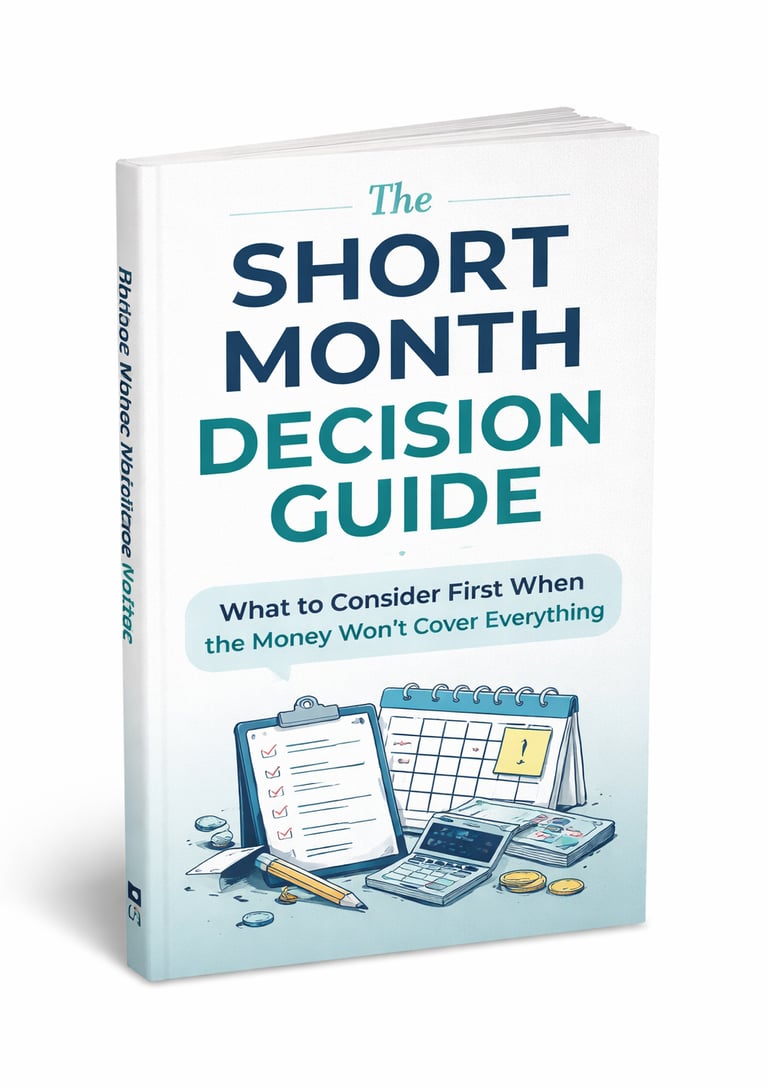
When money is short, the wrong decision can create long-term problems.
This short guide helps you slow down, understand tradeoffs, and avoid the most common mistakes people make during a tight month.
No budgeting systems.
No promises.
Just clarity when it matters most.
Why This Guide Exists
Short months don’t cause the most damage.
Rushed decisions do.
When money doesn’t cover every bill, most people don’t fail because they didn’t try hard enough — they fail because they’re forced to decide quickly, under pressure, with incomplete information.
This guide exists to slow that moment down.
What This Guide Helps With
This is not a plan to fix finances or eliminate stress.
It’s a short decision guide designed to help you:
Understand which choices tend to create lasting problems — and which don’t
Avoid common mistakes made during tight months
Think clearly before paying anything
Reduce the risk of turning a temporary shortfall into a long-term issue
The goal is simple: get through this month without making it harder than it needs to be.
What Makes This Different
Most financial content focuses on long-term improvement.
This guide focuses on right now.
It’s built for moments when:
the bills are due
the money isn’t enough
and guessing feels risky
No systems.
No motivation.
No judgment.
Just clear thinking when clarity matters most.
What You’ll Find Inside
This guide is intentionally short and focused. It’s designed to be read quickly, then referenced as needed during a tight month.
Inside, you’ll find:
A clear way to think about different types of bills
Not all obligations behave the same. This section explains how different categories tend to carry different kinds of consequences — without rules or advice.A simple order-of-operations framework
A neutral way to think about what tends to matter sooner versus later, so decisions are based on impact instead of pressure.Common mistakes that quietly create long-term problems
Including why certain “responsible-sounding” actions can backfire when money is short.Guidance on partial payments and communication
When they tend to help, when they don’t, and why saying less is often safer than explaining more.A one-page checklist
Designed to be reviewed before paying anything, helping you pause long enough to avoid unnecessary damage.
What This Guide Does Not Include
To keep this honest and useful, it intentionally leaves out:
budgeting systems
payoff plans
financial promises
motivation or mindset content
one-size-fits-all rules
This is a decision guide, not a financial program.
Who This Is For
This guide is meant for a short-term situation, not a permanent one.
It’s for moments when:
the bills are due
the money isn’t enough
and guessing feels risky
If that’s the situation, this guide helps you think clearly before acting.
Why Guessing Is Risky
Why Short Months Are Easy to Misjudge
When money is tight, decisions often feel urgent even when they aren’t — and unimportant when they actually matter.
That mismatch is where problems start.
Most mistakes made during short months aren’t dramatic. They’re small decisions made quickly, without context, that quietly shape what happens next.
The Problem With Guessing
Guessing usually relies on:
what feels loudest
what feels most uncomfortable
what worked once before
what sounds responsible in the moment
The issue is that feelings don’t reflect consequence timing.
Some choices cause immediate disruption but are reversible.
Others feel quiet now but are difficult to unwind later.
Without a framework, it’s easy to confuse the two.
Why General Advice Often Fails Here
Most financial advice is built for stable situations and long timelines.
Short months are different.
They involve:
limited options
incomplete information
pressure to act quickly
tradeoffs instead of solutions
Advice that works “in general” often breaks down under those conditions.
That’s why this guide focuses on how to think, not what to do.
The Value of a Calm Reference
In stressful moments, clarity is more useful than confidence.
This guide exists to be a neutral reference — something to consult before acting, not something that pushes action.
It won’t eliminate consequences.
It can help avoid unnecessary ones.
Frequently Asked Questions
Is this financial or legal advice?
No. This guide is informational only. It does not provide legal or financial advice, and it does not recommend specific actions. It’s designed to help with thinking through decisions, not making them for you.
Will this fix my finances or get me out of debt?
No. This guide is not a long-term solution. It focuses only on helping you avoid unnecessary damage during a short month when money doesn’t cover every bill.
How long is the guide?
The guide is approximately 20 pages. It’s meant to be read quickly and referenced as needed, not worked through over weeks.
Do I need to read it cover to cover?
No. Many readers start with the checklist and return to other sections as needed. It’s designed to be useful even if you only read parts of it.
Is this a budgeting system?
No. There are no budgets, plans, or systems included. The guide focuses on decision clarity, not financial restructuring.
Who is this guide for?
This guide is for short, temporary situations — a month where timing or circumstances create a gap between income and expenses.
It is not intended for ongoing or long-term financial hardship.
What if my situation is more complicated?
If the situation extends beyond a single month or involves ongoing issues, this guide may not be sufficient on its own. It’s meant as a short-term reference, not a comprehensive solution.
Will this work for everyone?
No. Every situation is different. This guide does not assume there is one right answer. Its value is in helping you think more clearly about tradeoffs before acting.
Is this a digital product?
Yes. This is a digital guide delivered online after purchase.